Every website you visit — from online stores to news portals to your favourite nasi lemak delivery app — lives on a computer called a server. Web hosting is the service that makes that possible.
If you're starting a business website, an online store, or even a personal blog, understanding web hosting is the first step toward building a reliable online presence.
Web Hosting in Plain English
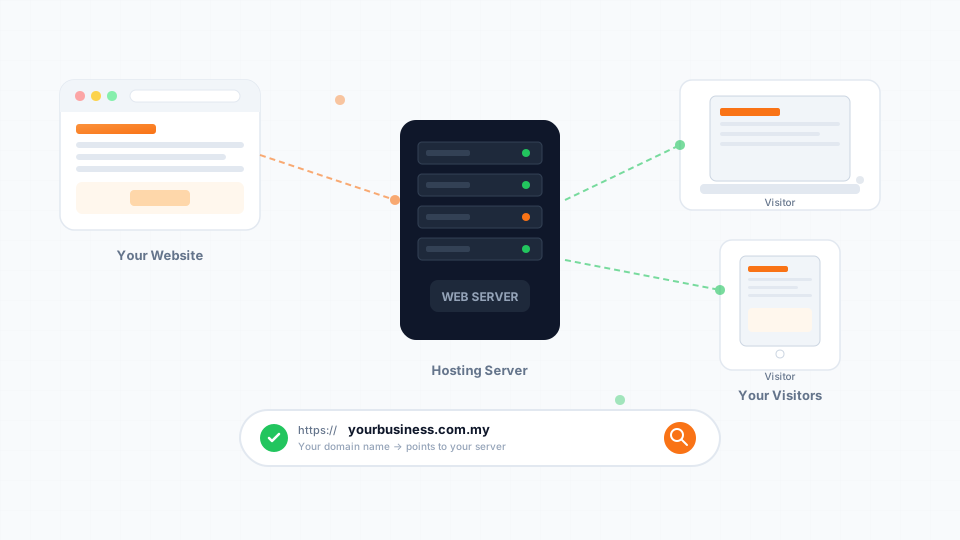
Think of web hosting like renting a shop lot:
- The server is the physical building where your shop operates
- Your website files (HTML, images, databases) are the stock and furniture inside
- Your domain name (e.g.
yourbusiness.com.my) is the street address customers use to find you - The hosting provider is the landlord who maintains the building, electricity, and security
Why You Need Web Hosting
You might wonder: "Can't I just build a website on my laptop and share it?" Technically, yes — but a proper hosting service gives you critical advantages:
Uptime and Reliability
A reputable hosting provider guarantees 99.9% uptime or higher. That means your website is accessible to customers virtually around the clock. Hosting your site on a home computer would mean any power outage, internet disruption, or hardware failure takes your business offline.
Professional Email
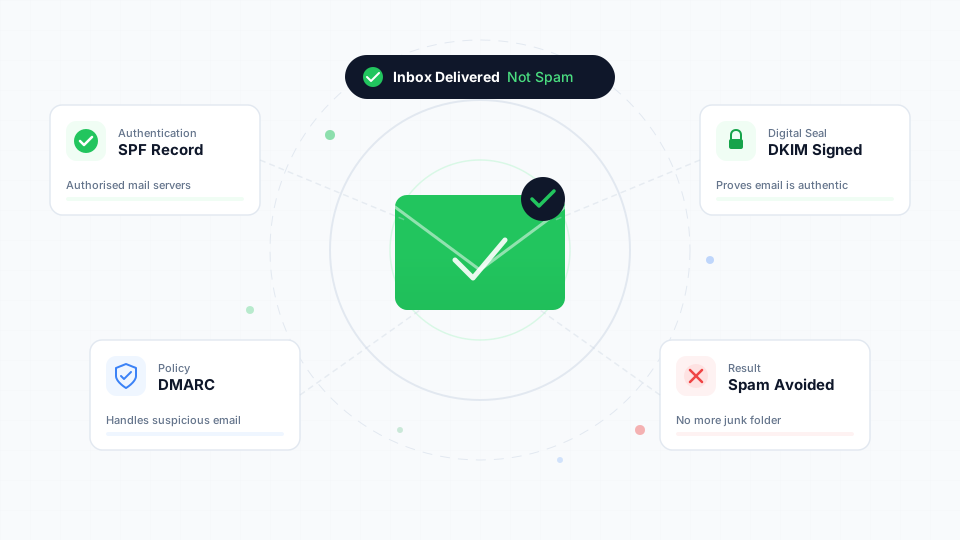
Most hosting plans include email hosting tied to your domain — for example, [email protected] instead of a generic Gmail or Hotmail address. This instantly boosts credibility with customers and partners.
Speed and Performance
Hosting servers use enterprise-grade hardware — NVMe SSDs, high-speed RAM, and optimised network connections — that load your website far faster than any consumer-grade setup could.
Security and Backups
Good hosting providers handle server security, software updates, firewall protection, and automated backups. If something goes wrong, your data can be restored quickly with minimal loss.
Scalability
As your business grows and traffic increases, your hosting plan can scale with you — from shared hosting to VPS to cloud — without rebuilding your website from scratch.
Types of Web Hosting
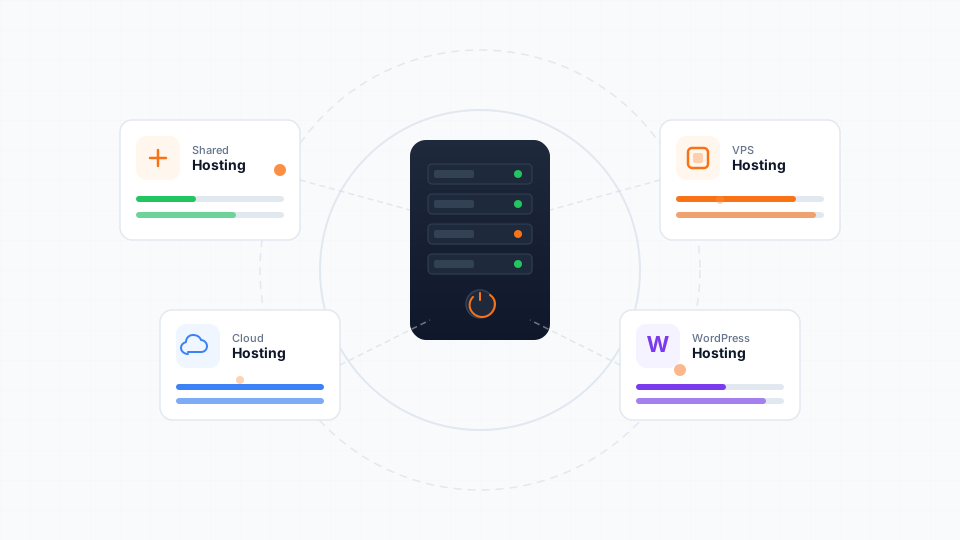
Not all hosting is the same. Here's a breakdown of the most common types, and who each one suits best.
Shared Hosting
Your website shares a server with other websites. Resources (CPU, RAM, storage) are divided among all tenants.
| Aspect | Details |
|---|---|
| Best for | Small business sites, blogs, portfolios, new online stores |
| Traffic capacity | Up to ~50,000 visits/month |
| Starting price | From RM 2.90/mo |
| Pros | Affordable, easy to manage via cPanel, no technical skills needed |
| Cons | Performance affected by neighbouring sites, limited resources |
VPS Hosting (Virtual Private Server)
A physical server is divided into isolated virtual servers. Each VPS gets dedicated resources that aren't shared with anyone else.
| Aspect | Details |
|---|---|
| Best for | Growing businesses, busy e-commerce stores, web applications |
| Traffic capacity | 50,000–500,000+ visits/month |
| Starting price | From RM 29/mo |
| Pros | Guaranteed resources, root access, better performance |
| Cons | Requires some technical knowledge to manage |
Cloud Hosting
Your website runs across a cluster of servers rather than a single machine. If one server has an issue, another takes over automatically.
| Aspect | Details |
|---|---|
| Best for | High-traffic sites, SaaS applications, mission-critical systems |
| Traffic capacity | Virtually unlimited (scales on demand) |
| Starting price | From RM 22.33/mo |
| Pros | High availability, auto-scaling, pay-for-what-you-use |
| Cons | More complex, costs can be unpredictable without caps |
WordPress Hosting
Technically a variant of shared or VPS hosting, WordPress hosting is a server environment specifically optimised for WordPress sites. It includes pre-installed WordPress, automatic updates, built-in caching, and WordPress-specific security rules.
| Aspect | Details |
|---|---|
| Best for | WordPress-powered business sites, WooCommerce stores, blogs |
| Starting price | From RM 4.50/mo |
| Pros | Pre-optimised for WordPress, 1-click staging, auto-updates |
| Cons | Only runs WordPress (not suitable for other CMS platforms) |
How to Choose the Right Hosting Plan
Selecting the right plan doesn't need to be complicated. Ask yourself these questions:
1. What type of website are you building?
- Simple business website or blog → Shared Hosting
- Online store with daily orders → WordPress Hosting or VPS
- Web application or high-traffic portal → VPS or Cloud Hosting
2. How much traffic do you expect?
If you're just starting out, shared hosting handles most new websites comfortably. Upgrade when your monthly traffic consistently exceeds 30,000–50,000 visits.
3. Do you need technical control?
If you want to install custom software, configure server settings, or run background processes, you'll need VPS or cloud hosting with root access. If you just want to manage your site through cPanel, shared hosting is perfect.
4. What's your budget?
Start with what you can afford and upgrade as revenue grows. There's no need to over-invest in a VPS when a shared plan will serve you well for the first year or two.
What to Look for in a Hosting Provider
Beyond the hosting type, evaluate providers on these criteria:
- Uptime guarantee — Look for at least 99.9%. Ask if they offer compensation for downtime.
- Server location — For a Malaysian audience, servers in or near Malaysia (Singapore data centres work well too) deliver faster load times.
- Support availability — 24/7 support with knowledgeable staff is non-negotiable. Test their response time before committing.
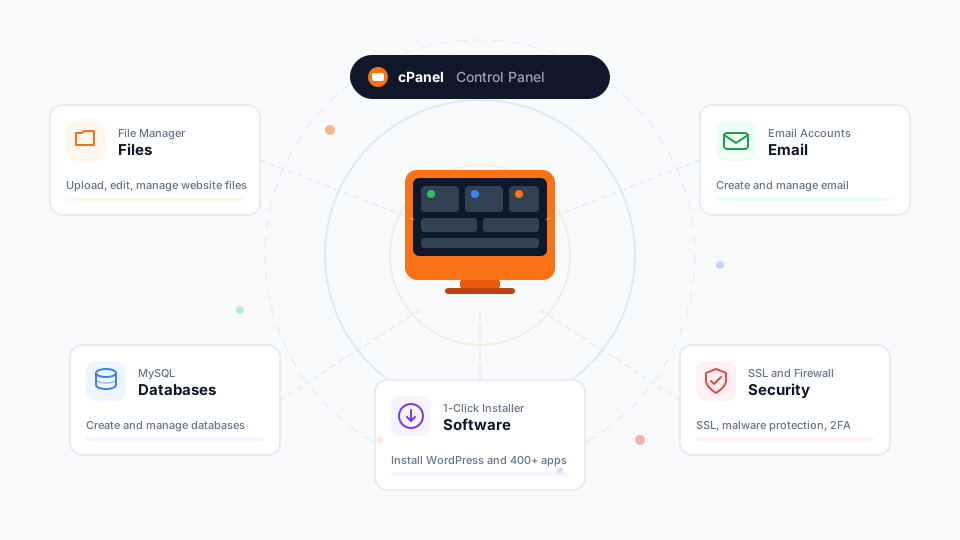
- Control panel — cPanel is the industry standard and the easiest to use. Avoid providers with proprietary panels that lock you in.
- Backup policy — Automated daily backups with easy one-click restore should be included, not an expensive add-on.
- Free SSL — Every hosting plan should include a free SSL certificate. There's no reason to pay extra for basic HTTPS in 2026.
- Migration support — If you're moving from another host, free migration assistance saves you time and risk.
Common Web Hosting Mistakes to Avoid
- Choosing purely on price — The cheapest plan often means overcrowded servers, slow support, and frequent downtime. A few ringgit more per month can make a huge difference in reliability.
- Ignoring backup frequency — "We do backups" is not the same as "automated daily backups with 30-day retention." Get specifics.
- Skipping SSL — Browsers flag HTTP sites as "Not Secure." This drives visitors away and hurts your Google rankings.
- Over-provisioning — You don't need a VPS for a 5-page brochure site. Start appropriately and scale when needed.
Wrapping Up
Web hosting is the foundation of your online presence. It determines how fast your site loads, how reliably it stays online, and how secure your visitors' data remains.
For most Malaysian businesses starting out, shared hosting is the smart choice — affordable, easy to manage, and powerful enough for the vast majority of websites. As your business grows, you can seamlessly upgrade to VPS or cloud hosting.
The key is to choose a hosting provider that offers reliable uptime, fast local servers, responsive support, and a clear upgrade path — so your hosting grows alongside your business.